

What Is an AI-First Website and Why Does It Convert Better?
An AI-first website is a B2B site architected from the ground up with intelligent automation, real-time personalization, and predictive user experience at its core. According to Forrester Research, AI-optimized websites see 25-40% higher conversion rates compared to traditional static sites, making AI-first design the new standard for competitive B2B organizations.
How Does AI-First Design Differ from Traditional Web Development?
Traditional B2B websites serve the same content to every visitor regardless of intent, industry, or stage in the buying journey. An AI-first website dynamically adapts every element, from headlines and case studies to CTAs and navigation paths, based on real-time behavioral signals and predictive models. This is not simple A/B testing. AI-first sites use machine learning to analyze visitor behavior patterns across thousands of sessions and continuously optimize the experience without manual intervention.
"The shift from static to AI-driven web experiences is the most significant change in B2B digital strategy since responsive design. Companies that treat their website as a living, learning system will dominate their markets." — Scott Brinker, VP of Platform Ecosystem, HubSpotAt Stable Solutions, we build AI-first websites using modern frameworks like SvelteKit combined with intelligent automation layers that personalize content delivery, optimize performance, and capture leads at precisely the right moment in the visitor journey.
What AI Capabilities Drive Higher B2B Conversion Rates?
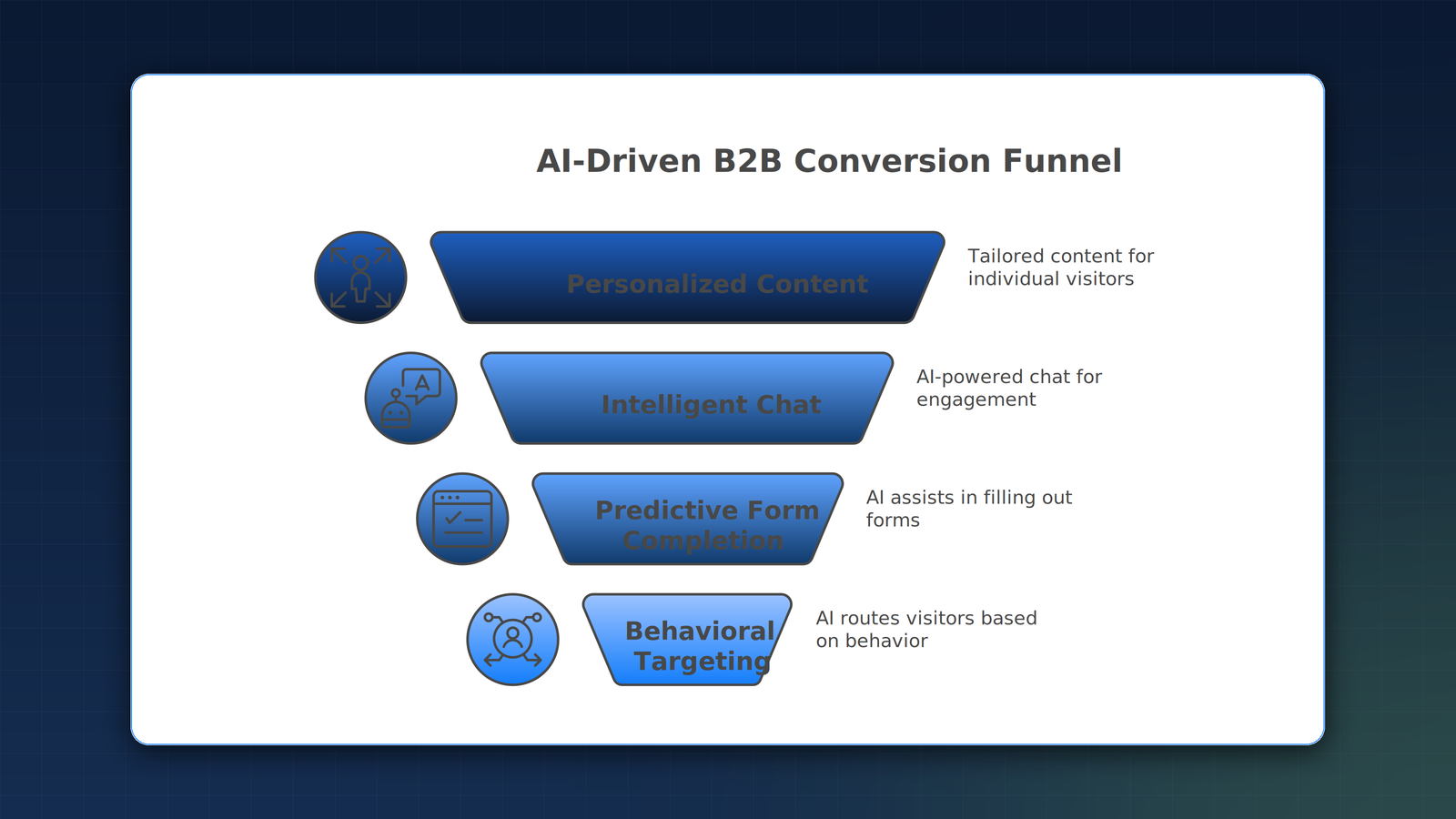
The highest-impact AI capabilities for B2B websites fall into four categories: predictive personalization, intelligent lead scoring, automated performance optimization, and conversational engagement. Predictive personalization uses visitor data to surface the most relevant content, case studies, and service pages. Research from Salesforce shows that 73% of B2B buyers expect personalized experiences, and sites that deliver personalization see 20% increases in sales opportunities. Intelligent lead scoring identifies high-intent visitors before they fill out a form, enabling proactive engagement through targeted CTAs and chatbot interactions. Key AI-driven capabilities include:
- Dynamic content personalization: Headlines, case studies, and CTAs adapt based on visitor industry and behavior
- Predictive lead scoring: Machine learning identifies high-intent visitors based on navigation patterns
- Automated performance optimization: AI manages image compression, code splitting, and CDN routing in real time
- Conversational AI: Context-aware chatbots qualify leads and answer technical questions 24/7
- Smart form optimization: Progressive profiling reduces form friction while capturing critical qualification data
Why Does Website Performance Matter More for AI-First Sites?
Performance is the foundation of every AI-first website. Google research confirms that 53% of mobile users abandon sites that take over 3 seconds to load, and every 100ms of additional latency costs measurable conversion rate declines. AI-first sites must load fast despite running sophisticated personalization and analytics in the background. This requires architectural decisions that prioritize performance from day one: server-side rendering, edge computing, efficient client-side hydration, and intelligent prefetching.
"Performance is not a feature. It is a prerequisite. If your AI personalization adds 2 seconds to page load, you have lost more visitors than you have converted. The best AI-first sites are indistinguishable from static sites in terms of speed." — Addy Osmani, Engineering Lead, Google ChromeModern frameworks like SvelteKit achieve this balance by compiling components at build time, minimizing JavaScript bundle sizes, and leveraging edge functions for dynamic content. Our web development practice at Stable Solutions combines these performance-first frameworks with AI automation layers that operate within strict performance budgets.
How Do You Measure the ROI of an AI-First Website?
Measuring AI-first website ROI requires tracking both leading and lagging indicators. Lagging indicators include conversion rate, pipeline value generated, and customer acquisition cost. Leading indicators, which are often more actionable, include engagement depth, content relevance scores, and lead quality metrics. Forrester data shows that B2B organizations with AI-optimized websites generate 35% more marketing-qualified leads at 28% lower cost per acquisition compared to organizations with traditional sites. The key is connecting website analytics directly to CRM and revenue data so that every AI optimization can be measured against actual business outcomes. A structured measurement framework should track visitor-level personalization effectiveness, chatbot qualification rates, form completion rates by segment, and page-level conversion contributions. Organizations that implement this level of measurement visibility typically identify their first optimization opportunities within 30 days of launching an AI-first site, as discussed in our piece on how agentic AI is reshaping development workflows.
What Does It Take to Build an AI-First B2B Website?
Building an AI-first website requires expertise across three domains: high-performance frontend engineering, machine learning integration, and data pipeline architecture. The frontend must be built on a framework that supports server-side rendering, edge deployment, and efficient client-side hydration. The AI layer requires integration with personalization engines, analytics platforms, and CRM systems. The data pipeline must capture, process, and activate visitor behavioral data in real time. Most B2B organizations lack the internal expertise to build and maintain all three layers. This is where working with an experienced AI automation partner becomes critical. The investment typically pays for itself within 6-12 months through improved conversion rates and reduced customer acquisition costs. Organizations should plan for a phased approach: launch with core performance and personalization capabilities, then layer in advanced features like predictive lead scoring and conversational AI as data accumulates and models mature.
Key Takeaways
- AI-first websites achieve 25-40% higher conversion rates than traditional B2B sites by dynamically personalizing every visitor interaction
- Performance remains non-negotiable: 53% of mobile users abandon sites loading over 3 seconds, even with sophisticated AI features running
- The highest-impact AI capabilities for B2B are predictive personalization, intelligent lead scoring, and automated performance optimization
- Measuring ROI requires connecting website analytics to CRM and revenue data to track real business outcomes, not vanity metrics
- A phased implementation approach reduces risk: start with performance and personalization, then add advanced AI features as data matures
Frequently Asked Questions
How much does an AI-first website cost compared to a traditional B2B site?
An AI-first website typically costs 30-50% more upfront than a traditional site due to the machine learning integration and data pipeline requirements. However, Forrester data shows these sites generate 35% more marketing-qualified leads at 28% lower acquisition cost, delivering positive ROI within 6-12 months for most B2B organizations.
Can I add AI capabilities to my existing website?
Yes, but with limitations. Retrofitting AI personalization onto a legacy site can improve conversion rates by 10-15%, but purpose-built AI-first architectures achieve 25-40% improvements because AI considerations inform every design and engineering decision from the start.
How long does it take to build an AI-first B2B website?
A full AI-first website build typically takes 12-16 weeks using a phased approach. The first phase, covering core performance, personalization, and analytics, can launch in 6-8 weeks. Advanced capabilities like predictive lead scoring and conversational AI are layered in during subsequent phases as visitor data accumulates.
What data do I need to power AI personalization?
At minimum, you need visitor behavioral data such as page views, scroll depth, and click patterns along with firmographic data from IP-based company identification or CRM integration. Richer data sources including past purchase history, email engagement, and support interactions significantly improve personalization accuracy over time.
Does AI personalization conflict with privacy regulations?
Not when implemented correctly. AI-first websites use first-party behavioral data and server-side processing, avoiding third-party cookies entirely. Properly configured consent management and transparent data practices ensure compliance with GDPR, CCPA, and other privacy frameworks while still enabling effective personalization.
Next Steps
Ready to transform your B2B website into an AI-powered conversion engine? Stable Solutions combines MIT-led engineering expertise with AI automation to build websites that adapt, learn, and convert. Schedule a consultation with our team to assess your current site and identify high-impact AI optimization opportunities, or explore our full capabilities to learn how we approach AI-first web development.