

What Was the OpenClaw Vulnerability?
The OpenClaw vulnerability (CVE-2026-25253) exposed over 40,000 AI agent instances to unauthorized access, allowing attackers to read sensitive data, manipulate agent behavior, and exfiltrate confidential business information. According to IBM's 2026 AI security analysis, 73% of organizations deploying AI agents had not conducted a security review before production, making unsecured agent deployments one of the fastest-growing enterprise security risks.
How Did 40,000 Agent Instances Get Exposed?
OpenClaw was a popular open-source framework for deploying AI agents that made it easy to stand up agent instances without requiring deep infrastructure knowledge. The problem was that the default configuration prioritized ease of deployment over security. Authentication was optional, network isolation was not enforced, and agent permissions were broadly scoped by default. Organizations deployed agents using these defaults, often without involving their security teams.
The result was predictable. Security researchers discovered that 40,000 agent instances were publicly accessible, many with access to internal databases, customer records, financial systems, and proprietary business logic. According to IBM's 2026 AI security analysis, the majority of these exposed instances belonged to mid-market companies that lacked dedicated AI security expertise. According to Gartner's 2026 AI risk assessment, organizations that deploy AI without security review face breach costs averaging 3-5x higher than those with pre-deployment security audits.
"OpenClaw is not a technology failure. It is a governance failure. The framework worked exactly as configured. The problem is that nobody configured it securely, because nobody with security expertise was involved in the deployment." — Bruce Schneier, Security Technologist and Author
What Are the Real Risks of Unsecured AI Agents?
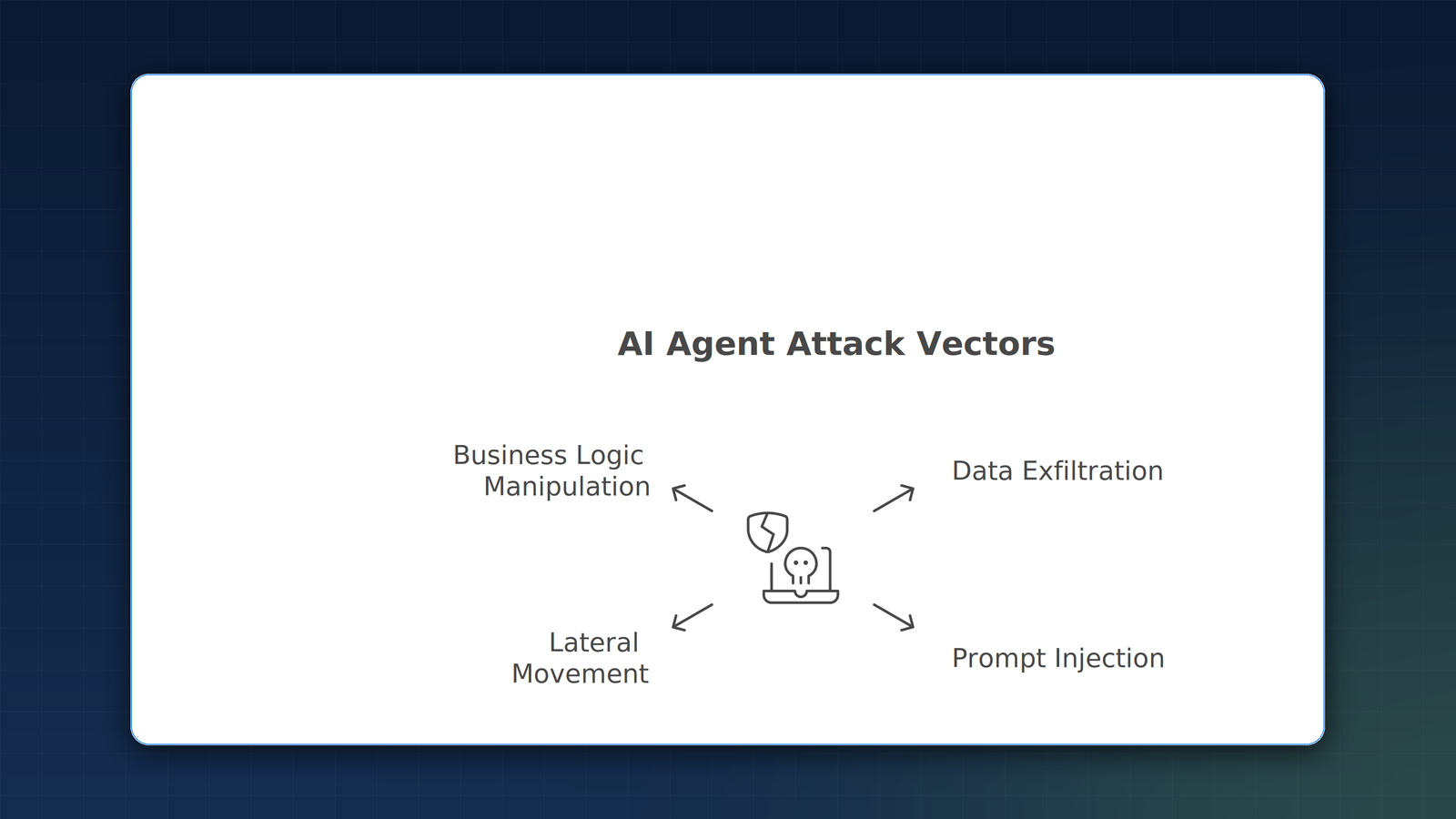
Unsecured AI agents create attack surfaces that are fundamentally different from traditional software vulnerabilities. An exposed AI agent does not just leak data. It can be manipulated to take actions on behalf of the attacker, using the agent's existing permissions and access to internal systems. The risks include:
- Data exfiltration: Agents with database access can be prompted to retrieve and expose sensitive records.
- Prompt injection: Attackers can manipulate agent behavior by injecting malicious instructions into agent inputs.
- Lateral movement: Agents with API access to internal systems provide attackers a pathway into the broader network.
- Business logic manipulation: Agents that execute business processes can be directed to process fraudulent transactions or approve unauthorized actions.
According to Deloitte's 2026 cybersecurity report, AI-related security incidents cost enterprises an average of $4.2 million per breach, 35% more than traditional software breaches, because the scope of access is typically broader and the attack vectors are less well understood by security teams.
Why Does This Keep Happening?
The root cause is a mismatch between the ease of deploying AI agents and the expertise required to deploy them securely. Modern AI frameworks make it possible for a single developer to stand up a functional agent in minutes. But securing that agent against adversarial attacks requires knowledge of authentication protocols, network isolation, input validation, output filtering, and permission scoping that most development teams do not possess.
"The democratization of AI deployment is a double-edged sword. Making it easy to deploy agents is wonderful for innovation. But when security is an afterthought, you get OpenClaw. Every agent deployment needs a security review, period." — Parisa Tabriz, VP of Engineering, Google
According to the World Economic Forum's 2026 Global Risks Report, AI security ranks among the top five global technology risks for 2026-2028, with the speed of AI adoption significantly outpacing the development of security best practices and trained security professionals.
How Should Organizations Deploy AI Agents Securely?
Secure AI agent deployment requires a layered approach that integrates security at every level of the architecture. At Stable Solutions, we follow a framework that addresses the vulnerabilities exposed by incidents like OpenClaw:
First, every agent must authenticate and be authenticated. No anonymous access, no default credentials, no shared keys. Second, agents must operate with minimum necessary permissions, following the principle of least privilege. Third, all agent inputs must be validated and sanitized to prevent prompt injection attacks. Fourth, all agent outputs must be filtered to prevent data leakage. Fifth, network isolation must ensure agents can only access the systems they need. Sixth, comprehensive logging and monitoring must capture all agent actions for audit and incident response.
According to IBM's 2026 AI ROI study, organizations implementing comprehensive AI security frameworks achieve 3.7x ROI on their AI investments, compared to significantly lower returns for organizations that treat security as an afterthought. The reason is simple: security incidents erode trust, trigger regulatory scrutiny, and create costs that dwarf the savings from automation. Deloitte estimates that the average AI-related security breach costs $4.2 million, and regulatory fines for data protection violations can add millions more. Organizations that build security into their AI architecture from day one avoid these costs entirely while moving faster because they do not need to retroactively fix vulnerabilities discovered in production. The OpenClaw incident demonstrated that the cost of fixing security after deployment is orders of magnitude higher than building it in from the start, both in direct remediation costs and in the trust damage that follows a public breach. For a deeper framework on building comprehensive security and governance into your AI deployments, see our article on AI governance and guardrails.
Key Takeaways
- The OpenClaw vulnerability (CVE-2026-25253) exposed 40,000 AI agent instances due to insecure default configurations and lack of security review.
- Unsecured AI agents create unique attack surfaces including prompt injection, data exfiltration, and lateral movement into internal systems.
- AI-related security breaches cost 35% more than traditional breaches due to broader access scope, per Deloitte's 2026 analysis.
- Secure deployment requires authentication, least privilege, input validation, output filtering, network isolation, and comprehensive monitoring.
- Organizations with proper AI security frameworks achieve significantly higher ROI because they avoid the trust erosion and regulatory costs of breaches.
Frequently Asked Questions
Is my organization vulnerable to an OpenClaw-style attack?
If you have deployed AI agents using open-source frameworks without a dedicated security review, you may be at risk. The 40,000 exposed instances represent only the ones researchers found, and many more likely remain undiscovered. A security audit of your agent architecture is the only way to know for certain. Key areas to evaluate include authentication mechanisms, network exposure, permission scoping, input validation, and whether comprehensive logging captures all agent actions for audit purposes.
What is prompt injection and why is it dangerous?
Prompt injection is a technique where attackers embed malicious instructions in agent inputs to manipulate agent behavior. It is particularly dangerous because AI agents process natural language, making it difficult to distinguish legitimate instructions from injected ones without proper input validation and filtering. Unlike traditional SQL injection where parameterized queries provide a clear defense, prompt injection defense requires multiple layers including input sanitization, output filtering, and behavioral boundaries that limit what actions an agent can take.
Do we need a dedicated AI security team?
For organizations deploying AI agents at scale, yes. AI security requires specialized knowledge that most traditional security teams do not yet possess. The World Economic Forum estimates that 120 million workers need reskilling for AI, and AI security professionals are among the most in-demand roles. Organizations that cannot build an internal AI security team should partner with experienced firms that can provide security architecture review, penetration testing, and ongoing monitoring specifically designed for AI systems.
Can we use AI agents safely without building everything in-house?
Yes. Partnering with experienced AI deployment firms like Stable Solutions provides the security expertise without the overhead of building an internal team. The key is ensuring your partner has demonstrable AI security capabilities and follows established frameworks such as NIST AI Risk Management and the OWASP AI Security guidelines. A qualified partner will build security into the agent architecture from day one, including authentication, least-privilege access, input validation, and comprehensive monitoring.
How do we audit our existing AI agent deployments?
Start with a complete inventory of all deployed agents, their access permissions, network exposure, and authentication mechanisms. Then conduct penetration testing specifically designed for AI systems, including prompt injection and data exfiltration testing. Review audit logs to understand what data agents have accessed and what actions they have taken. Finally, evaluate whether each agent operates under the principle of least privilege or has been granted overly broad access that exceeds its operational requirements.
Next Steps
Concerned about the security of your AI agent deployments? Contact Stable Solutions for a comprehensive AI security assessment. Our team will audit your agent architecture, identify vulnerabilities, and implement the guardrails needed to deploy AI agents safely at scale. Learn more about our AI security and automation capabilities.