

How Is AI Reshaping SEO for B2B Companies?
AI-era SEO is a search optimization discipline that accounts for AI-generated overviews, conversational search interfaces, and generative engine optimization (GEO), requiring B2B companies to structure content for citation by large language models in addition to traditional search engine ranking algorithms. According to SparkToro, 58.5% of Google searches now result in zero clicks, meaning the majority of searchers find their answers directly on the search results page without visiting any website. For B2B companies that depend on organic search to generate leads and build authority, this shift demands a fundamental rethinking of SEO strategy in 2026.
Why Does Traditional SEO Alone No Longer Work?
For over two decades, SEO strategy followed a relatively predictable formula: research keywords, create optimized content, build backlinks, and climb the rankings. That model is breaking down. BrightEdge reports that 68% of online experiences still begin with a search engine, but what happens after that initial search has changed dramatically. Google's AI Overviews now synthesize answers from multiple sources and display them prominently above traditional organic results. Bing's Copilot and other AI-powered search tools go further, generating comprehensive responses that may reference your content without ever sending a visitor to your site. For B2B firms, this means ranking on page one is no longer sufficient — your content must be structured to be cited, quoted, and referenced by AI systems themselves.
"The companies winning in search today are not just optimizing for Google's algorithm — they are optimizing for the AI models that sit on top of Google. That requires a completely different content architecture." — Dr. Lily Ray, Senior Director of SEO at Amsive Digital
What Is Generative Engine Optimization (GEO)?
Generative Engine Optimization is the practice of structuring content so that AI-powered search engines and large language models are more likely to cite it in their generated responses. A landmark study from Princeton University found that 44.2% of AI-generated citations come from content that front-loads key information in the opening sentences. The same research revealed that including statistics with source attribution boosts AI citation visibility by 41%, while incorporating expert quotes with credentials increases visibility by 40%. These findings have profound implications for B2B content strategy:
- Front-load answers: Place the most important information in the first 80 words of every page and section
- Cite authoritative sources: Include specific statistics with named sources rather than vague claims
- Use expert quotes: Include attributed quotes from named individuals with credentials
- Structure with clear headings: Use question-based H2 and H3 tags that match how people search
- Write in an encyclopedic tone: AI models favor neutral, authoritative content over promotional language
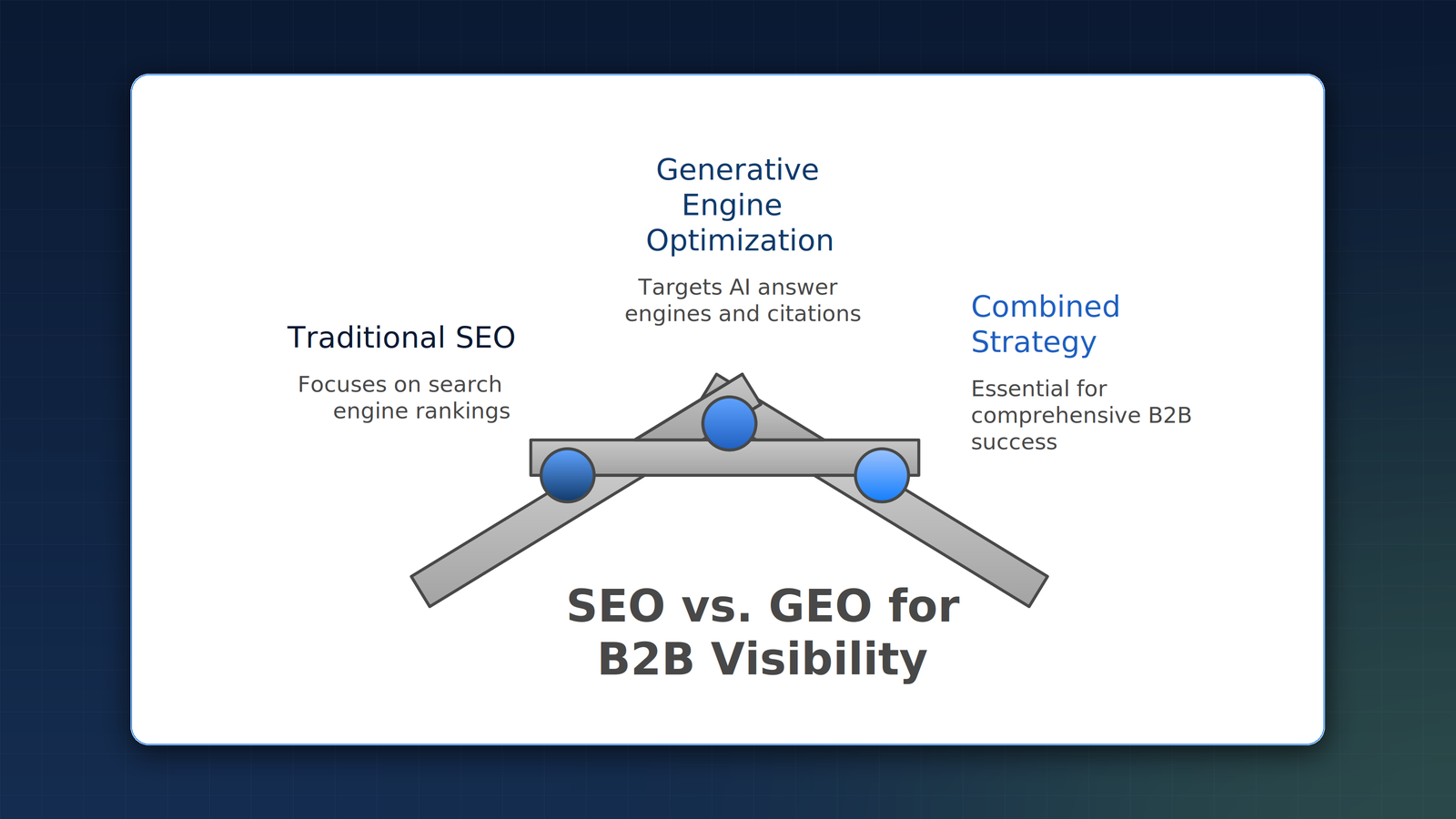
The Zero-Click Challenge and How B2B Firms Can Adapt
The zero-click trend is particularly challenging for B2B companies whose sales cycles depend on driving prospects to their websites. However, the shift also creates opportunities for firms willing to adapt. When your content is cited in an AI overview, your brand gains visibility and authority even without a direct click. The key is ensuring your brand name appears alongside the cited information. McKinsey research indicates that companies using AI-informed marketing strategies see 10-20% revenue uplift, partly because AI citations function as implicit endorsements that influence buyer perception throughout the research phase. B2B firms should track AI citation metrics alongside traditional SEO KPIs, measuring brand mentions in AI-generated responses as a new form of organic visibility. At Stable Solutions, our team helps clients build content architectures specifically designed to earn both traditional rankings and AI citations.
"Zero-click searches are not the end of SEO — they are the evolution of it. The brands that appear in AI overviews are building trust at the exact moment buyers are forming their shortlists." — Rand Fishkin, Co-Founder of SparkToro
Practical SEO Strategy for B2B Companies in 2026
Adapting to AI-driven search requires both strategic and tactical changes. Strategically, B2B firms must shift from a purely traffic-focused mindset to a visibility-and-authority framework that values AI citations alongside website visits. Tactically, this means restructuring existing content and creating new content with GEO principles embedded from the start. Every piece of content should answer a specific question in its opening paragraph, include verifiable data points with source attribution, and provide structured information that AI systems can easily parse and cite. Technical SEO fundamentals remain important — fast page loads, mobile optimization, clean site architecture, and proper schema markup all help AI systems understand and trust your content. For B2B companies building or redesigning their web presence, integrating SEO architecture from day one is far more effective than retrofitting it later. Our Digital Growth Strategies work is designed to build these foundations into every project.
Content Formats That Win in AI-Driven Search
Not all content performs equally in the age of AI search. Based on analysis of AI citation patterns and the Princeton GEO study findings, certain formats consistently outperform others. Comprehensive FAQ pages that directly answer common industry questions earn disproportionate AI citations because they match the question-and-answer format that AI systems prefer. Data-rich research reports and industry benchmarks are heavily cited because they provide the verifiable statistics that boost AI visibility by 41%. Long-form guides with clear hierarchical structure — using H2 and H3 headings that mirror search queries — make it easy for AI systems to extract and attribute specific sections. B2B firms should also consider how their AI and automation expertise can be showcased through thought leadership content that demonstrates genuine authority, as AI systems increasingly evaluate author credibility and domain expertise when selecting sources to cite. Companies exploring AI-powered marketing tools should also review how AI-powered communications can complement their SEO efforts with personalized outreach.
Key Takeaways
- 58.5% of Google searches now result in zero clicks — B2B firms must optimize for AI citation visibility, not just traditional rankings (SparkToro)
- Front-loading key information in the first 80 words increases AI citation probability by 44.2% according to Princeton's GEO research
- Statistics with source attribution boost AI visibility by 41%, and expert quotes with credentials increase it by 40%
- Track AI citation metrics alongside traditional SEO KPIs to measure true search visibility in 2026
- Structure content with question-based headings, verifiable data, and encyclopedic tone to maximize both human and AI readability
Frequently Asked Questions
Is traditional SEO dead in 2026?
No. Traditional SEO fundamentals — keyword research, technical optimization, quality content, and backlinks — remain important. However, they are no longer sufficient on their own. BrightEdge data shows 68% of online experiences still begin with search engines, but the way results are displayed and consumed has changed. B2B firms need to layer GEO strategies on top of traditional SEO to maintain and grow visibility.
How do I measure whether AI is citing my content?
Monitor AI citation visibility using tools that track brand mentions in AI-generated search results, including Google AI Overviews and Bing Copilot responses. Several emerging platforms now offer AI citation tracking alongside traditional rank tracking. Additionally, monitor branded search volume and direct traffic trends, as AI citations often drive increased brand awareness that manifests as more branded queries.
What is the most important GEO tactic for B2B companies?
Front-loading authoritative answers with cited statistics is the single highest-impact GEO tactic. Princeton's research found that content with statistics and source attribution earns 41% more AI citations. For B2B companies, this means leading every content piece with a direct, data-backed answer to the primary question before expanding into detailed analysis.
How long does it take to see results from GEO optimization?
GEO results typically appear faster than traditional SEO improvements because AI systems re-index and re-evaluate content more frequently than traditional search crawlers. Most B2B firms implementing comprehensive GEO strategies report measurable increases in AI citations within 4-8 weeks, compared to the 3-6 month timeline common for traditional SEO ranking improvements.
Should B2B companies create separate content for AI search?
No. The best approach is creating content that serves both human readers and AI systems simultaneously. Well-structured, authoritative, data-rich content that answers specific questions performs well across all search interfaces. Creating separate content for AI search would duplicate effort and potentially create conflicting information that confuses both search engines and AI models.
Next Steps
The search landscape is evolving rapidly, and B2B companies that adapt their SEO strategy now will capture disproportionate visibility as AI-driven search becomes the dominant paradigm. Whether you need to audit your existing content for GEO readiness, build a new content architecture from the ground up, or integrate AI citation tracking into your marketing analytics, Stable Solutions can help. Contact our team to schedule a search visibility assessment, or explore our full range of Digital Growth Strategies.